What environmental impact reporting is, and is not
Environmental impact reporting is the structured communication of a product's or company's environmental impact, with the method, scope and data quality stated. It is not a certificate, a label or an adjective. For a clothing brand it takes three forms.
Start with the first form. The second follows from the same data. The third needs review and comes last.
Why brands wait, and why they should not
Brands wait for three reasons: they think they need complete supplier data first, they think they need an LCA specialist, and they think the rules are not final. None of these is a reason to wait.
- Complete supplier data does not exist for any brand. Indicative results start from defaults and improve.
- A textile-dedicated platform carries the LCA knowledge inside the tool. The brand needs LCA literacy, not LCA modelling skills.
- The rules are not final, but the direction is: ESPR (Reg. EU 2024/1781) is in force, the textile delegated act for the Digital Product Passport is expected in Q4 2027 with 18 months to implement, CSRD data requests already arrive, and the Empowering Consumers Directive prohibits unsubstantiated generic claims from 27 September 2026. Every month of delay is a month less to build data and routines.
The four-step route
Step 1: pick the products that matter
Select the 10 to 20 products, or product types, that represent the largest share of units sold. Reporting starts where the impact is, not where the story is.
Step 2: calculate an indicative result from what you have
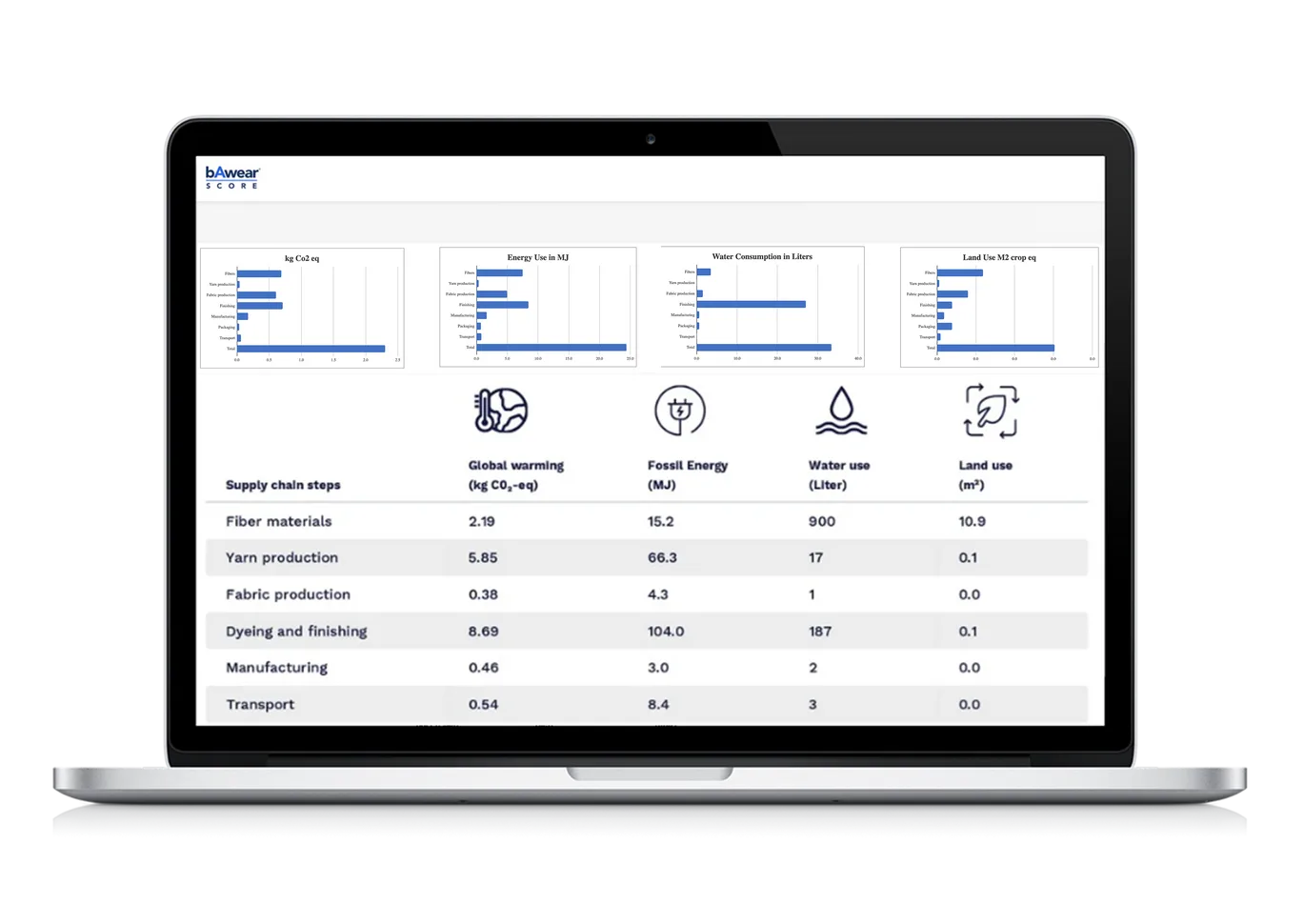
For each product, take the tech pack: fibre composition, weight, country of production, construction, dyeing method if known. Enter it into a textile-dedicated platform that starts from a predefined worst-case scenario. Read the result per supply chain step. Time: 5 to 10 minutes per product.
Step 3: report internally and find the hotspots
Put the results side by side. The stage with the largest share is the hotspot. This is the first internal report: which products, which stages, which materials drive the impact. Decisions follow: which supplier to ask for data, which material to compare, which product to redesign.
Step 4: improve data and move to B2B reporting
Ask the suppliers of the hotspot processes for primary data: energy per kilogram, water per kilogram, energy source. Replace the defaults. The result becomes specific to the brand's own chain. This is the data a CSRD customer asks for. Report it with the method, boundary, functional unit and data quality stated.
Where a public or comparative claim is wanted, move that product to a reviewed assessment with documented assumptions, prepared for independent third-party review. Do not make the claim before the review.
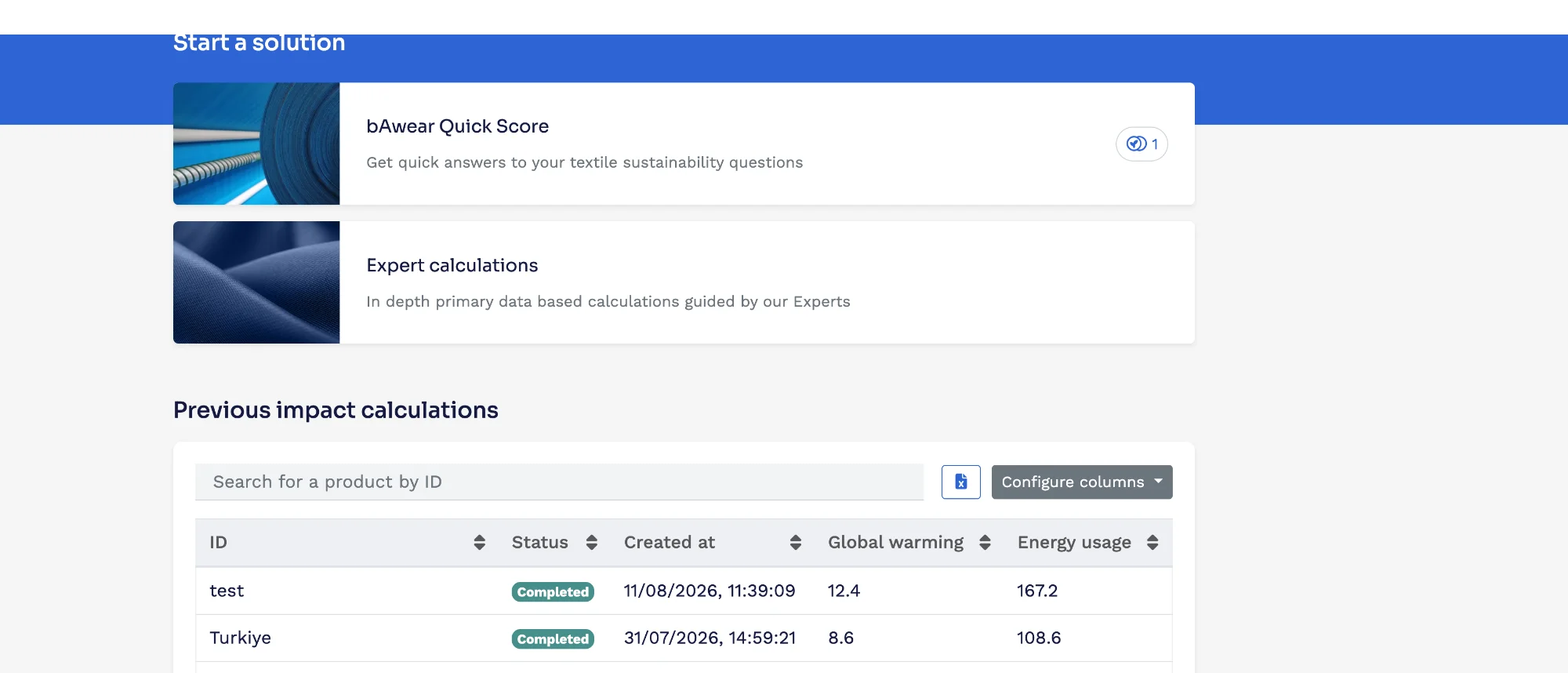
Quick Score is step 2. Expert supports step 4.
What to report, in which form
A number without these six elements is not a report. It is a claim.
Where bAwear Score fits
bAwear Score is built for exactly this route. Quick Score gives an indicative result per product in minutes, showing climate, water, energy and land use for every supply chain step, with the scope stated alongside. Bulk upload covers a full collection and results export for internal and Scope 3 reporting. Expert gives reviewed results for the products that carry an external claim. bAcademy covers the LCA basics your team needs. A first calculation is free.
Quick Score results are indicative and intended for internal decision support and reference product comparison. They do not replace a full ISO 14040/14044 LCA with critical review.
Frequently asked questions
- 1Regulation (EU) 2024/1781 (ESPR)
- 2Directive (EU) 2022/2464 (CSRD)
- 3Directive (EU) 2024/825, Empowering Consumers for the Green Transition
- 4ISO 14040:2006 and ISO 14044:2006