
bAwear Score
Home
Pricing
Methodology

Built on science,
not assumption

bAwear uses the ReCiPe 2016 Midpoint (Hierarchist) method, powered by SimaPro. Every scenario covers the full textile supply chain from cradle to gate.

ReCiPe
2016 Midpoint (H)
CO₂
MJ
L
m²
Anton Luiken, Co-Founder and CTO of bAwear
BEHIND THE TOOL
"Textile companies do not need another score. They need to understand where the impact actually sits, and to trust the number enough to act on it."

Anton Luiken has worked in textile chemistry, processing and sustainability for over 40 years. He built the bAwear methodology around two principles: model the supply chain the way the industry really works, and stay conservative where data is missing rather than optimistic. Results reference ReCiPe 2016 Midpoint (Hierarchist), aligned with ISO 14040/14044 principles.

Anton Luiken
Co-Founder / Senior Textile Expert
How it works

From product data to impact score

Our streamlined LCA approach covers the full textile supply chain
in four clear steps.

01
Define product

Select a textile product scenario. Define fibre composition, weight, and construction.

02
Pick scope

Choose cradle to gate or cradle to grave. Define the boundary of your assessment.

03
Calculate impact

SimaPro engine processes inputs using ReCiPe 2016 Midpoint (H). Results across 4 impact categories.

04
Analyse results

Identify hotspots, compare against reference products, and generate reports.

Impact categories

Four categories that matter

ReCiPe 2016 Midpoint (Hierarchist) impact assessment, focusing on the indicators most relevant to textile production.

Global warming
kg CO₂ eq

Greenhouse gas emissions contributing to climate change. The primary indicator for textile environmental impact.

Energy use
MJ

Fossil resource scarcity from direct fuel use and indirect conventional electricity production.

Water use
L

Water consumed or withdrawn throughout fibre production, processing, and care processes.

Land use
m²

Agricultural and occupation land used for fibre production, especially relevant for natural fibres.

Supply chain coverage

Cradle to gate and grave

Our methodology covers every step of the textile supply chain.
Each stage contributes to the total environmental impact of a product.

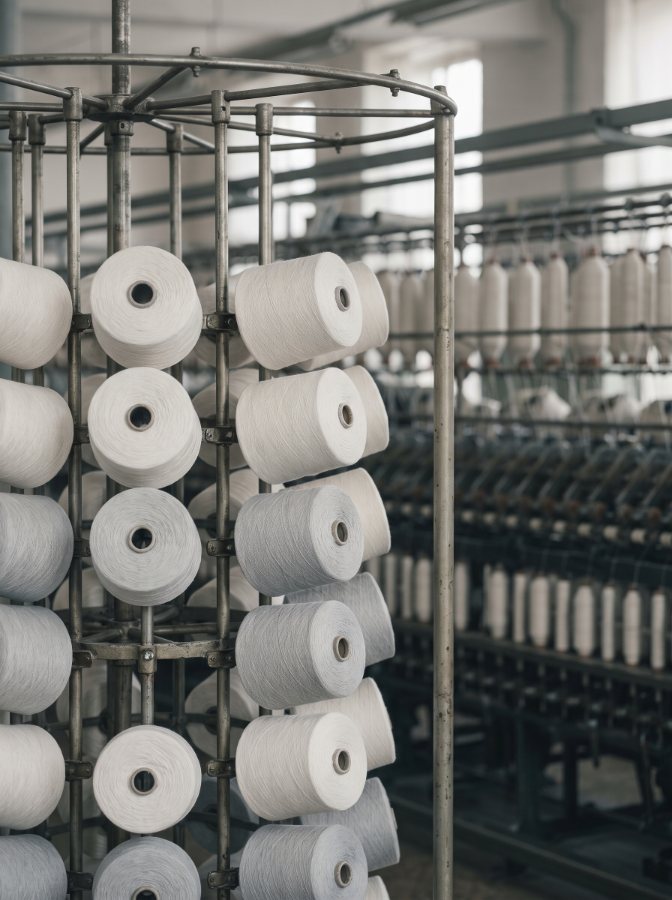
Raw materialFibre production
SpinningYarn formation
FabricWeaving / knitting
DyeingWet processing
FinishingTreatment
ManufacturingGarment making
TransportDistribution
Use phaseCare and washing
End of lifeReuse, recycling, disposal
Raw materialSpinningFabricDyeingFinishingManufacturingTransportUse phaseEnd of life
Cradle to gate
Cradle to grave
Powered by SimaPro

Textile LCA calculation engine

bAwear utilizes SimaPro's calculation engine and LCA expertise to provide credible LCA-based impact measurement for textiles. Together, we combine over 30 years of textile sustainability and LCA experience.

Validated data sources
Generic textile model developed in collaboration with PRé Sustainability.
ReCiPe 2016 Midpoint (H)
Aligned with ISO 14040/14044 for reliable environmental impact assessments.
Greenwashing proof by design
Worst-case secondary data where primary data is missing. No unsupported claims.
Critical review by Bureau Veritas
Ongoing
Independent critical review of the methodology is currently in progress.
40+
Years of combined textile LCA expertise
4
Impact categories reported
50+
Textile-specific scenarios
Powered by
SimaPro
LCA engine
Our position

Where we stand

Two questions we get asked in every methodology discussion.

How about the PEFCR and the EF database?

The Apparel & Footwear PEF Category Rules build on the European Commission's Environmental Footprint database. EF 3.1 expired in December 2025, and the Commission is working on EF 4.0, expected in 2027.

That leaves a gap: there is currently no maintained EF dataset to calculate PEFCR results against, and the category rules for apparel and footwear are not finalised.

We calculate with ReCiPe 2016 Midpoint (Hierarchist) on SimaPro, aligned with ISO 14040/14044, so your results stay traceable and comparable over time. We follow the EF 4.0 work and will map our scenarios to it once it is published.

Why we don't calculate chemical toxicity

The composition and behaviour of chemicals used in textile processes are largely unknown and highly variable. Chemicals in formulations are often not fully disclosed, and their reactions during processing are complex and unpredictable.

Safety Data Sheets (SDS) are frequently incomplete, making accurate toxicity assessment difficult. Eco-toxicity models require known chemical structures, which are not always available.

bAwear believes that any toxicity impact calculations would be unreliable, and potentially misleading by a factor of 10-100 times, and thus prefers not to report these impact categories.

Why we exclude chemical toxicity indicators

Ready to measure your product impact?

Start with a free Quick Score or book a demo to explore Expert-level reporting.

bAwear Score {{ navLinks }}
Language
Log in Book a demo Start for free
{{ sec.title }}
{{ it.l }}
Language
Start for free Log in
{{ ck.title }}

{{ ck.text }} {{ ck.link }}

Book a demo
30 minutes, your products, our team
{{ leadMsg }}
Methodology

Built on science,
not assumption

bAwear uses the ReCiPe 2016 Midpoint (Hierarchist) method, powered by SimaPro. Every scenario covers the full textile supply chain from cradle to gate.

Request documentation Start for free
{{ methodVisual }}
Anton Luiken, Co-Founder and CTO of bAwear
BEHIND THE TOOL
"Textile companies do not need another score. They need to understand where the impact actually sits, and to trust the number enough to act on it."

Anton Luiken has worked in textile chemistry, processing and sustainability for over 40 years. He built the bAwear methodology around two principles: model the supply chain the way the industry really works, and stay conservative where data is missing rather than optimistic. Results reference ReCiPe 2016 Midpoint (Hierarchist), aligned with ISO 14040/14044 principles.

Anton Luiken
Co-Founder / Senior Textile Expert
How it works

From product data to impact score

Our streamlined LCA approach covers the full textile supply chain
in four clear steps.

{{ processFlow }}
Impact categories

Four categories that matter

ReCiPe 2016 Midpoint (Hierarchist) impact assessment, focusing on the indicators most relevant to textile production.

Global warming
kg CO₂ eq

Greenhouse gas emissions contributing to climate change. The primary indicator for textile environmental impact.

Energy use
MJ

Fossil resource scarcity from direct fuel use and indirect conventional electricity production.

Water use
L

Water consumed or withdrawn throughout fibre production, processing, and care processes.

Land use
m²

Agricultural and occupation land used for fibre production, especially relevant for natural fibres.

Supply chain coverage

Cradle to gate and grave

Our methodology covers every step of the textile supply chain.
Each stage contributes to the total environmental impact of a product.
{{ supplyChainAnim }}
Powered by SimaPro

Textile LCA calculation engine

bAwear utilizes SimaPro's calculation engine and LCA expertise to provide credible LCA-based impact measurement for textiles. Together, we combine over 30 years of textile sustainability and LCA experience.

Validated data sources
Generic textile model developed in collaboration with PRé Sustainability.
ReCiPe 2016 Midpoint (H)
Aligned with ISO 14040/14044 for reliable environmental impact assessments.
Greenwashing proof by design
Worst-case secondary data where primary data is missing. No unsupported claims.
Critical review by Bureau Veritas
Ongoing
Independent critical review of the methodology is currently in progress.
40+
Years of combined textile LCA expertise
4
Impact categories reported
50+
Textile-specific scenarios
Powered by
SimaPro
LCA engine
Our position

Where we stand

Two questions we get asked in every methodology discussion.

How about the PEFCR and the EF database?

The Apparel & Footwear PEF Category Rules build on the European Commission's Environmental Footprint database. EF 3.1 expired in December 2025, and the Commission is working on EF 4.0, expected in 2027.

That leaves a gap: there is currently no maintained EF dataset to calculate PEFCR results against, and the category rules for apparel and footwear are not finalised.

We calculate with ReCiPe 2016 Midpoint (Hierarchist) on SimaPro, aligned with ISO 14040/14044, so your results stay traceable and comparable over time. We follow the EF 4.0 work and will map our scenarios to it once it is published.

Why we don't calculate chemical toxicity

The composition and behaviour of chemicals used in textile processes are largely unknown and highly variable. Chemicals in formulations are often not fully disclosed, and their reactions during processing are complex and unpredictable.

Safety Data Sheets (SDS) are frequently incomplete, making accurate toxicity assessment difficult. Eco-toxicity models require known chemical structures, which are not always available.

bAwear believes that any toxicity impact calculations would be unreliable, and potentially misleading by a factor of 10-100 times, and thus prefers not to report these impact categories.

Why we exclude chemical toxicity indicators

Ready to measure your product impact?

Start with a free Quick Score or book a demo to explore Expert-level reporting.

Book a demo Start for free