The rules a Dutch textile company faces
What this means in practice
Three types of data are needed.
- 1Volume and material data for the Dutch extended producer responsibility scheme: what was placed on the market, in which quantities, with which composition.
- 2Product-level environmental data for the DPP, for CSRD Scope 3 requests from large customers, and to substantiate any environmental statement under the Empowering Consumers Directive. This data must state its method, system boundary and functional unit.
- 3Corporate reporting data for CSRD, where the company is in scope or supplies a company that is.
Type 1 is an administrative task. Type 3 is a corporate reporting task. Type 2 is the one most Dutch textile SMEs cannot deliver today, and it is the one that every other instrument depends on.
Why "compliance software" is the wrong search term
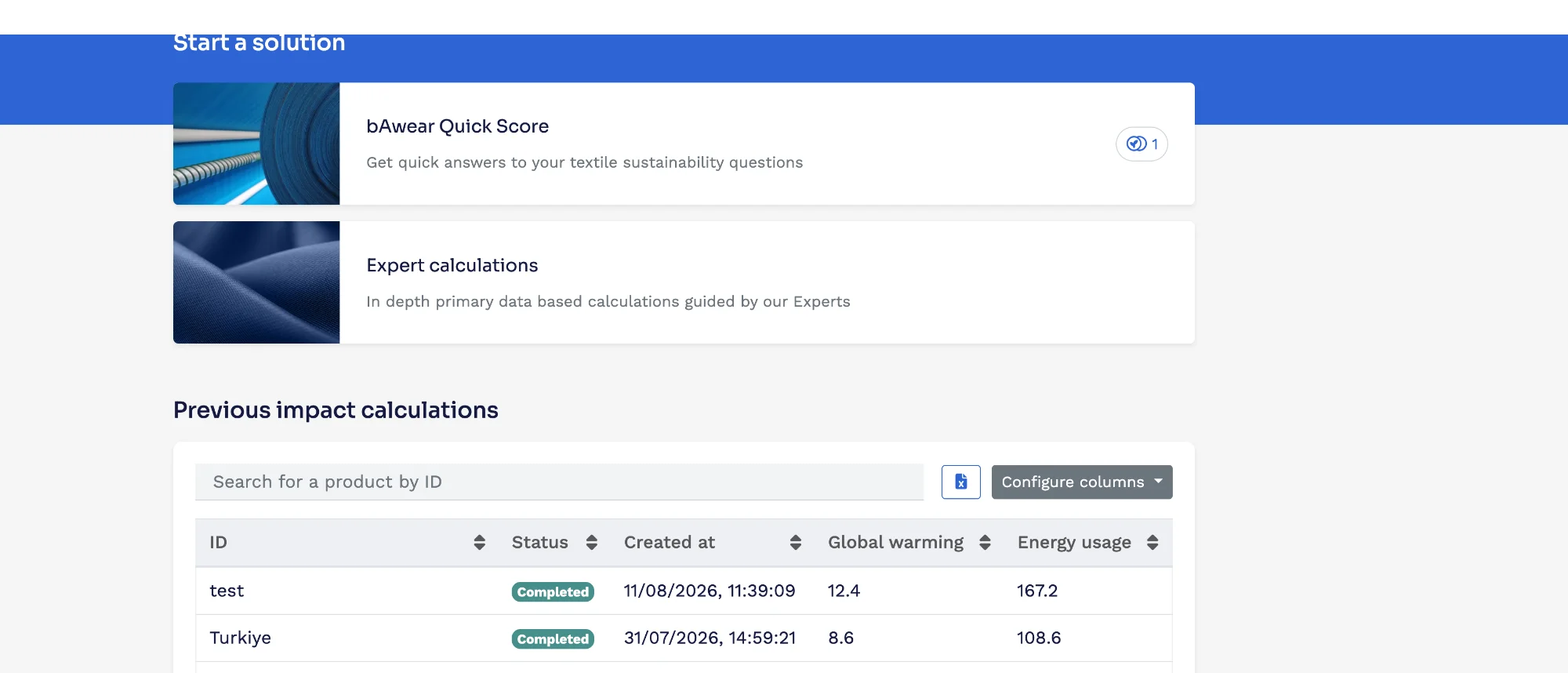
Compliance software suggests a system that checks boxes. The Dutch and EU textile rules do not ask for a checked box. They ask for product-level data with a stated method. That data must be calculated, not declared. The right question for a textile SME is: which platform produces the environmental data that ESPR, the DPP, CSRD and the claims rules all need, in a form that can be reported and integrated? The answer is an LCA-based impact measurement platform, connected to the reporting or passport systems the company uses.
The advantage of a Dutch platform
- Language and support in Dutch. LCA has a vocabulary. Explaining a functional unit or a system boundary to a product team is easier in the team's own language. bAwear Score's interface is available in 11 languages including Dutch and the team is based in the Netherlands.
- Method with Dutch roots. ReCiPe 2016 was developed by RIVM, Radboud University, Leiden University and PRé Sustainability. It is the method bAwear Score applies.
- Knowledge of the Dutch landscape. Dutch textile SMEs deal with UPV Textiel, Dutch federations, Dutch buyers and Dutch educators. A platform that works in this ecosystem knows which data is asked for and by whom.
- Proximity for reviewed results. Where an external claim needs a reviewed assessment, bAwear's LCA and textile experts work with the company directly.
How a Dutch textile SME prepares: a sequence
Where bAwear Score fits
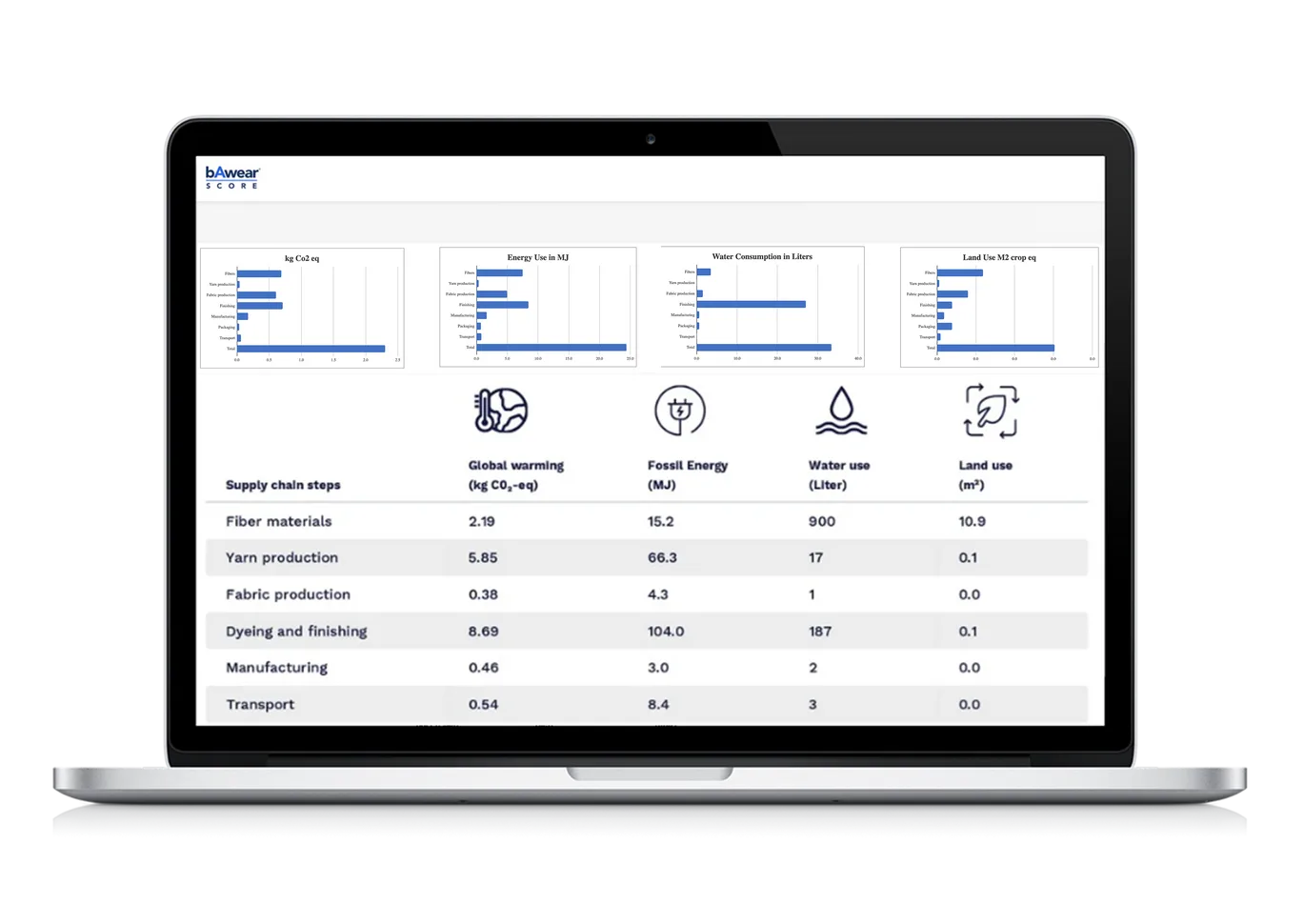
bAwear Score is an LCA-based environmental impact measurement platform for the textile and apparel industry, built by bAwear B.V. in the Netherlands and powered by SimaPro. It produces the product-level environmental data that ESPR, the Digital Product Passport, CSRD Scope 3 requests and claims substantiation need. It applies ReCiPe 2016 Midpoint (Hierarchist) in line with ISO 14040/14044 and reports global warming (kg CO₂-eq), fossil resource use (MJ), water use (L) and land use (m²), per supply chain step, across cradle-to-gate or cradle-to-grave, with 1 kg of textile product as the standard functional unit. Quick Score gives indicative results in 5 to 10 minutes per product from more than 300 predefined worst-case scenarios. Expert gives reviewed results prepared for independent third-party review. Bulk upload and a REST API connect to PLM, ERP, traceability and DPP systems. bAcademy provides the knowledge to use the data. bAwear Score is built in the direction of the EU framework; it does not claim compliance with the PEFCR, which is not yet formalised.
Quick Score results are indicative and intended for internal decision support and reference product comparison. They do not replace a full ISO 14040/14044 LCA with critical review.
Frequently asked questions
- 1Regulation (EU) 2024/1781 (ESPR)
- 2Directive (EU) 2022/2464 (CSRD)
- 3Directive (EU) 2024/825, Empowering Consumers for the Green Transition
- 4Besluit uitgebreide producentenverantwoordelijkheid textiel (UPV Textiel), the Netherlands, 2023
- 5ISO 14040:2006 and ISO 14044:2006
- 6ReCiPe 2016, RIVM, the Netherlands